top of page

self learning
“Building robots today, see them working tomorrow.”
Camps provide me with valuable opportunities to collaborate, exchange ideas, and apply new knowledge in meaningful ways. I am a self-motivated, independent learner who is deeply curious about how things work and how they can be improved to create better solutions for everyday life.
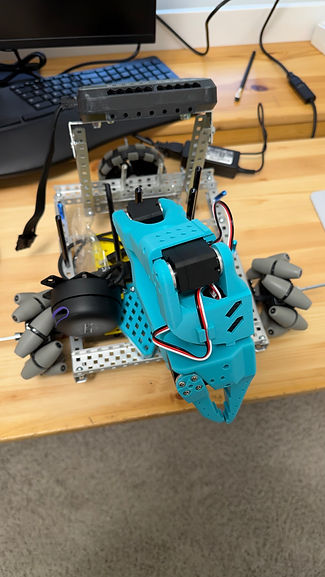
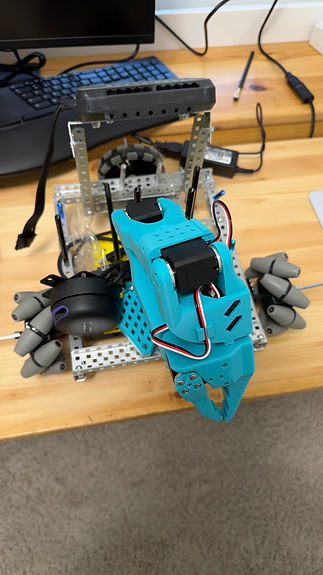
LERONOMICA
Mechanical + AI with VEX V5 + 3D PRINTED LEROBOT SO101 6 - DOF ARM
MAY - JUNE 2026
I built a small, lightweight robot that uses LiDAR and two cameras to map its surroundings, avoid obstacles, and navigate between different rooms autonomously. Through this project, I learned about robotics, computer vision, sensor integration, autonomous navigation, and problem-solving while improving my programming and engineering skills.

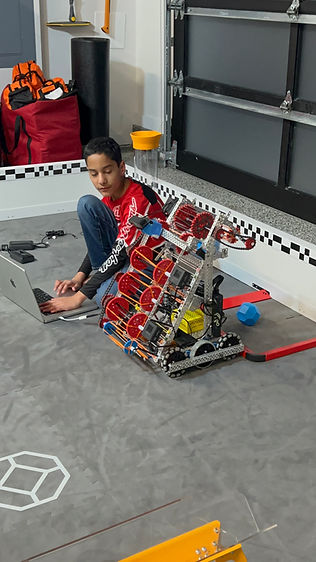
VEX V5 25 - 26 ROBOTICS SEASON
Mechanical + AI with VEX V5
MARCH - MAY 2026
During the 2025–2026 VEX V5 Robotics season, I designed, built, and programmed a competition robot. I learned mechanical engineering, coding, and AI concepts while working with my team to solve challenges, improve our robot, and compete in tournaments.

CUBESAT
Small robot made by VEX V5 parts
4U, 20 x 20 x 20 cm
JULY 2026
Measures data from the Arduino BME280 environmental sensor and heading from the Adafruit BN055 IMU sensor. The CubeSat measures barometric pressure, humidity, temperature, and heading. It uses the Jetson Nano, which runs a computer vision model to count wildlife via a camera. This experience
gave me knowledge about how a small robot can measure data in the atmosphere and send that data through radio waves, which is then received by the ground station, which is in turn my Mac.

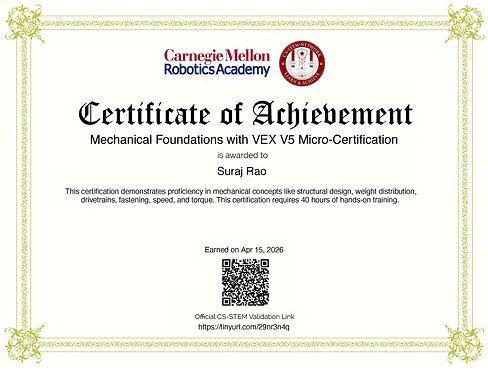
CARNEGIE MELLON
ROBOTICS ACADEMY
Mechanical Foundations with VEX V5
FEBRUARY 2026
In this project, I built different types of fans, a moving crane arm, and various drive chains to explore how motors create motion and how mechanical parts work together to transfer force. The motor powered the fan blades, causing them to spin and generate movement.
Through this project, I learned how energy is transferred from a motor to mechanical components and how basic mechanical systems work together in robots and machines. I presented this project at an Elementary School Science Fair.
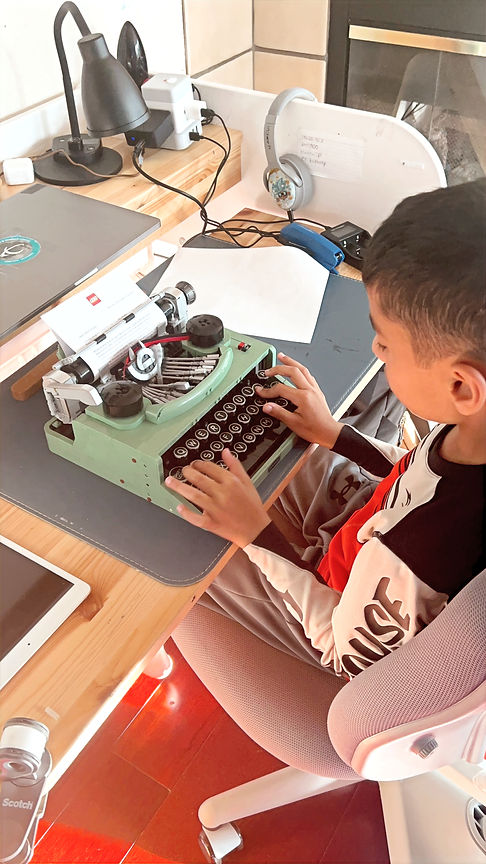

LEGO TYPEWRITER
JUNE 2024
I am always eager to learn new things and challenge myself to build something complex, driven by curiosity about how things work and function.
Building a functional vintage 1950s LEGO typewriter taught me how simple mechanical principles—gears, levers, and one-way mechanisms—combine to create complex functionality, such as the movement of the type bar and carriage.
This project required precision and repetition, as many small components had to be carefully assembled to form the larger sections of the typewriter. The process was challenging, as even a small error in placement could prevent the internal mechanisms from working correctly, requiring troubleshooting and backtracking.
Through this experience, I not only deepened my understanding of mechanical systems but also strengthened my focus, patience, and problem-solving skills.
GEARJITS SOLAR ROVER
JUNE 2023
Building a Gearjits solar robot was a hands-on experience that taught me key STEM concepts. I learned how photovoltaic cells convert sunlight into energy, explored renewable resources, and gained a practical understanding of clean energy.
Assembling the gearbox helped me see how gears and shafts create motion, while following blueprints taught me the importance of precision in engineering.
The process required testing and troubleshooting, which strengthened my problem-solving skills, logical thinking, and patience as I worked to make the robot function correctly.

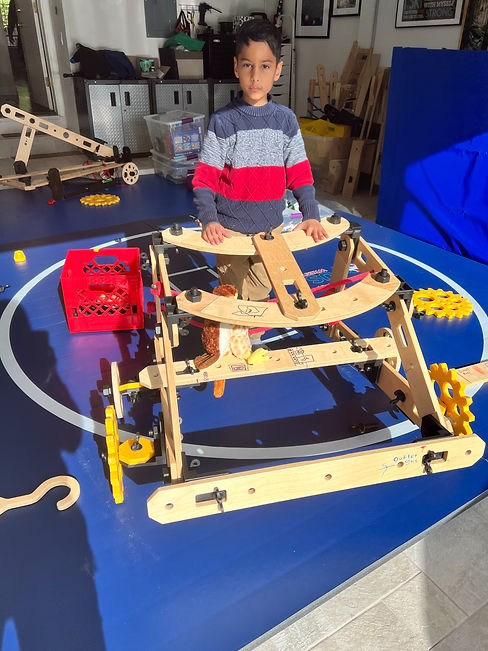
RIGAMAJIG
FEB 2019-JUNE 2022
My passion for engineering and physics began at age six, when I built a Rigamajig car in an open-ended, hands-on activity that strengthened my creativity, problem-solving skills, and critical thinking.
Unlike a pre-designed kit, this project required me to plan, design, build, and test my vehicle from the ground up, analyzing form and function to ensure it could transport an object from one point to another.
Through trial and error, I explored physics concepts such as wheels, axles, rotation, and friction, discovering how small adjustments could improve performance.
The modular components also reinforced mathematical thinking, as I measured, counted, and calculated proportions to keep the design balanced.
This process encouraged experimentation, adaptation, and perseverance as I refined my design until it worked, giving me a deeper appreciation for engineering and the iterative process of invention.
bottom of page